
Invitation to the Exhibition Opening
“Inventory Illustrators – a female profession”
OPENING: Tuesday, 6 January 2026, 6–8 pm
Entrance: Rittergasse 25, CH-4051 Basel
Exhibition period:
Fri, 9 January to Sat, 28 February 2026
Exhibition opening hours:
Friday and Saturday, 11 am–6 pm, and by appointment: info@klauslittmann.com
Entrance: Rittergasse 25, CH-4051 Basel (freier Eintritt)
We are very much looking forward to welcoming you and your friends to the opening and throughout the entire duration of the exhibition. It would be especially lovely to raise a glass together at the vernissage to welcome the New Year.
Klaus Littmann & the FOR ART Team
PUBLIC PROGRAMME
No registration required · Free admission · ENTRANCE Rittergasse 25, Basel
Thursday, 22 January 2026, 6.00 pm
Moderated conversation with Rahel Wille, Curator of the Ethnographic Collection at the Bern History Museum and curator of Ausgezeichnet! Künstlerinnen des Inventars, MARKK, Hamburg, 2019
Thursday, 12 February 2026, 6.00 pm
Moderated conversation with Dr. Friedrich von Bose, Director of the Museum der Kulturen Basel
“Inventory Illustrators – a female profession”
A loan from the MARKK – Museum am Rothenbaum
Kulturen und Künste der Welt
After Alberto Giacometti’s graphic works, FOR ART turns its attention to drawing for the second time. «Inventory Illustrators – a female profession» opens a window onto the methods of institutional collections as well as onto the magic of the precise gaze. The loan of 150 inventory drawings comes from the Museum am Rothenbaum – Kulturen und Künste der Welt (MARKK) in Hamburg.
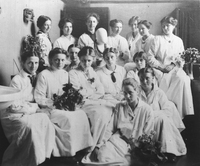
They drew fishhooks, headdresses, arrows. Before them lay textiles, masks, or baskets. The women illustrators at the «Museum für Völkerkunde» in Hamburg were classified as «technical assistants», and their work was a key to the scholarly documentation of objects from all corners of the globe. 150 exhibits from the historic drawings holdings can be seen exclusively in Basel until the end of February.
The exhibition is an event on an intimate scale: each sheet reads like a distillation of a distant cultural practice; each rendering of an object—whether made of coconut leaves, porcelain, wood, or wool—records features of a world that was then described as «other». Through its generous loan, the Museum am Rothenbaum offers insight into early twentieth-century object cataloguing and into an artistic practice whose creators remained unnamed for a long time.
Shown outside Hamburg for the first time, «Inventory Illustrators – a female profession» invites visitors in Basel to marvel. In addition to the concise object description—material, size, and provenance—on the front of each card, it is above all the drawings on the reverse that have entered the museum’s memory. At times, a pen outlines a bowl in just a few strokes, sketches an animal in silver or unfired clay. Elsewhere, materials and their workmanship are rendered in colour and in meticulous detail. Here, handwritten description still precedes photography: close observation and faithful rendering to scale attest to an attentiveness to every detail.
Numerous expeditions to the colonies in the late nineteenth century had expanded knowledge of non-European ways of life. The Hamburg Senate strengthened museums as public-law centres of expertise and increased budgets for acquisitions and staff. Following the example of other institutions in Germany, the «Museum für Völkerkunde» employed eleven women illustrators between 1907 and 1913. Mostly from middle-class families, they had attended drawing schools or brought training in the applied arts. Each of them catalogued around 1,500 objects per year in the storage collections. For secure, if modest, pay in the shadow of male curators, their anonymously performed work shaped the view of the world.
The Museum am Rothenbaum – Kulturen und Künste der Welt, known as MARKK (until 2018 «Museum für Völkerkunde Hamburg»), was founded in Hamburg in 1879 and today ranks among the largest ethnographic museums in Europe.
Media resources: information and images
more about FOR ART – A Temporary Art Intervention by Littmann Kulturprojekte. Basel 2025–2028